
Introduction
The Rosetta Stone is one of the most significant archaeological finds in history, discovered in 1799 by French soldiers during the Napoleonic Wars. It is a stone slab inscribed with three scripts: Ancient Greek, Egyptian hieroglyphs, and a later form of Egyptian writing known as demotic. The discovery of the Rosetta Stone was important because it provided scholars with the key to deciphering hieroglyphs, which had been a mystery for centuries. But what was the Rosetta Stone originally used for?
The Purpose of the Rosetta Stone

The Rosetta Stone was commissioned during the reign of King Ptolemy V in 196 BC. It was created to commemorate the king's ascension to the throne and to document a decree issued by the priests of Memphis, which granted him additional lands and privileges. The decree was inscribed on the stone in three scripts so that it could be read by people of different languages and cultures. The Greek script was used because it was the language of the ruling class in Egypt at the time, while demotic was used for administrative purposes, and hieroglyphs were reserved for important religious and ceremonial texts.
The Discovery of the Rosetta Stone

The Rosetta Stone was discovered by French soldiers in 1799 during the Napoleonic Wars. The soldiers were part of Napoleon's campaign to Egypt, and they found the stone in the town of Rosetta (now known as Rashid) while building fortifications. The stone was taken to Alexandria and then to France, where it was studied by scholars who were fascinated by its inscriptions. The British captured the stone in 1801 and it has been housed in the British Museum in London ever since.
The Importance of the Rosetta Stone

The Rosetta Stone is important because it provided scholars with the key to deciphering hieroglyphs, which had been a mystery for centuries. Before the discovery of the Rosetta Stone, the meaning of hieroglyphs was lost, and they were thought to be purely symbolic or magical. The Rosetta Stone allowed scholars to compare the hieroglyphs with the Greek text, which they could already read, and they were able to work out the meaning of many hieroglyphic symbols. This opened up a whole new world of knowledge about ancient Egyptian culture, religion, and history.
The Translation of the Rosetta Stone
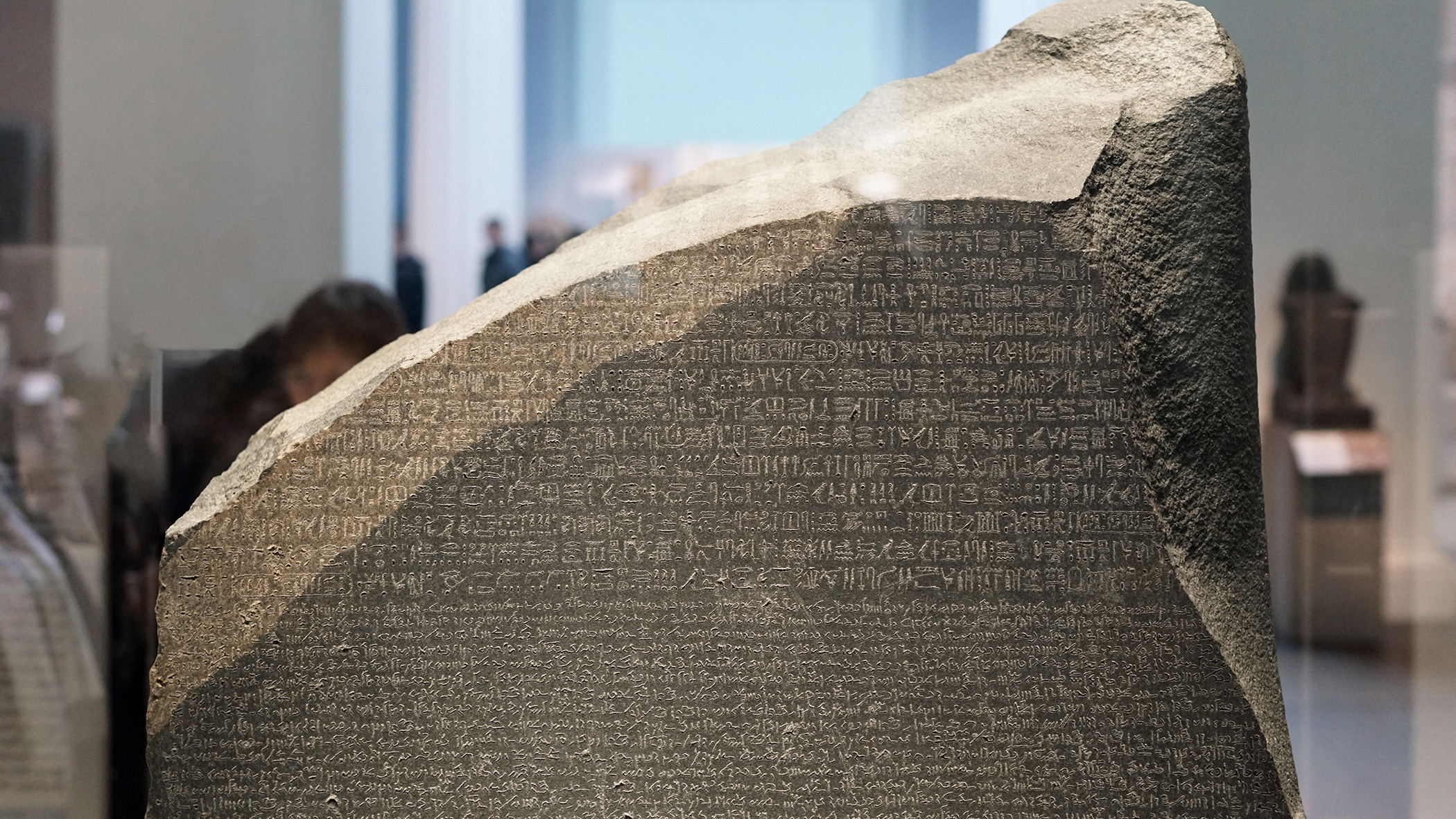
The translation of the Rosetta Stone was a long and complex process. It took several years for scholars to work out the meaning of the hieroglyphs, as they had to compare them with the Greek and demotic texts and work out the pronunciation of the symbols. The first person to make significant progress was a French scholar named Jean-Francois Champollion, who spent years studying the stone and eventually became the first person to translate hieroglyphs. His work was based on the comparison of the Rosetta Stone with other Egyptian texts, and he was able to decipher the symbols by working out their sound values.
The Legacy of the Rosetta Stone

The Rosetta Stone has had a lasting legacy on the study of ancient Egypt. It opened up a whole new world of knowledge about the culture, religion, and history of ancient Egypt, and it allowed scholars to read and interpret hieroglyphs for the first time in centuries. The Rosetta Stone is still studied today, and it remains one of the most important archaeological finds in history.
The Rosetta Stone Today

The Rosetta Stone is now housed in the British Museum in London, where it is on display for visitors to see. The stone is protected by a special case, and visitors can see all three scripts inscribed on the stone. The Rosetta Stone is still studied today, and it remains an important symbol of the study of ancient Egypt and the decipherment of hieroglyphs.
Conclusion
The Rosetta Stone is one of the most important archaeological finds in history. It was originally used to commemorate the ascension of King Ptolemy V and to document a decree issued by the priests of Memphis. The stone was inscribed in three scripts so that it could be read by people of different languages and cultures. The discovery of the Rosetta Stone was important because it provided scholars with the key to deciphering hieroglyphs, which had been a mystery for centuries. The Rosetta Stone remains an important symbol of the study of ancient Egypt and the decipherment of hieroglyphs today.