Introduction
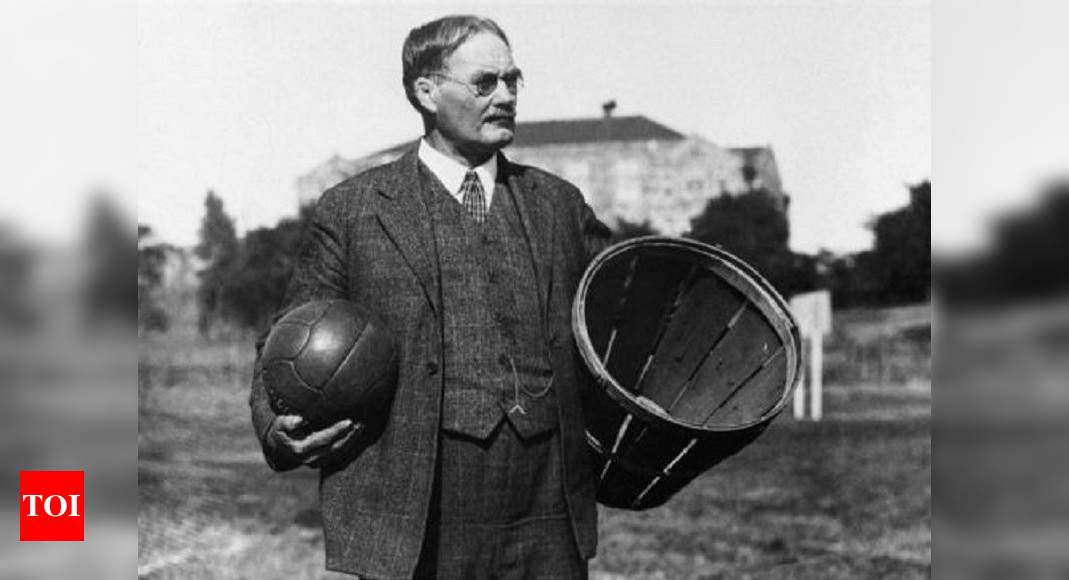
Basketball is a popular sport played by millions of people all over the world. It was invented on December 21, 1891, by Dr. James Naismith, a Canadian physical education instructor. He created the game to provide an indoor sport for his students during the winter months.

The Original Rules
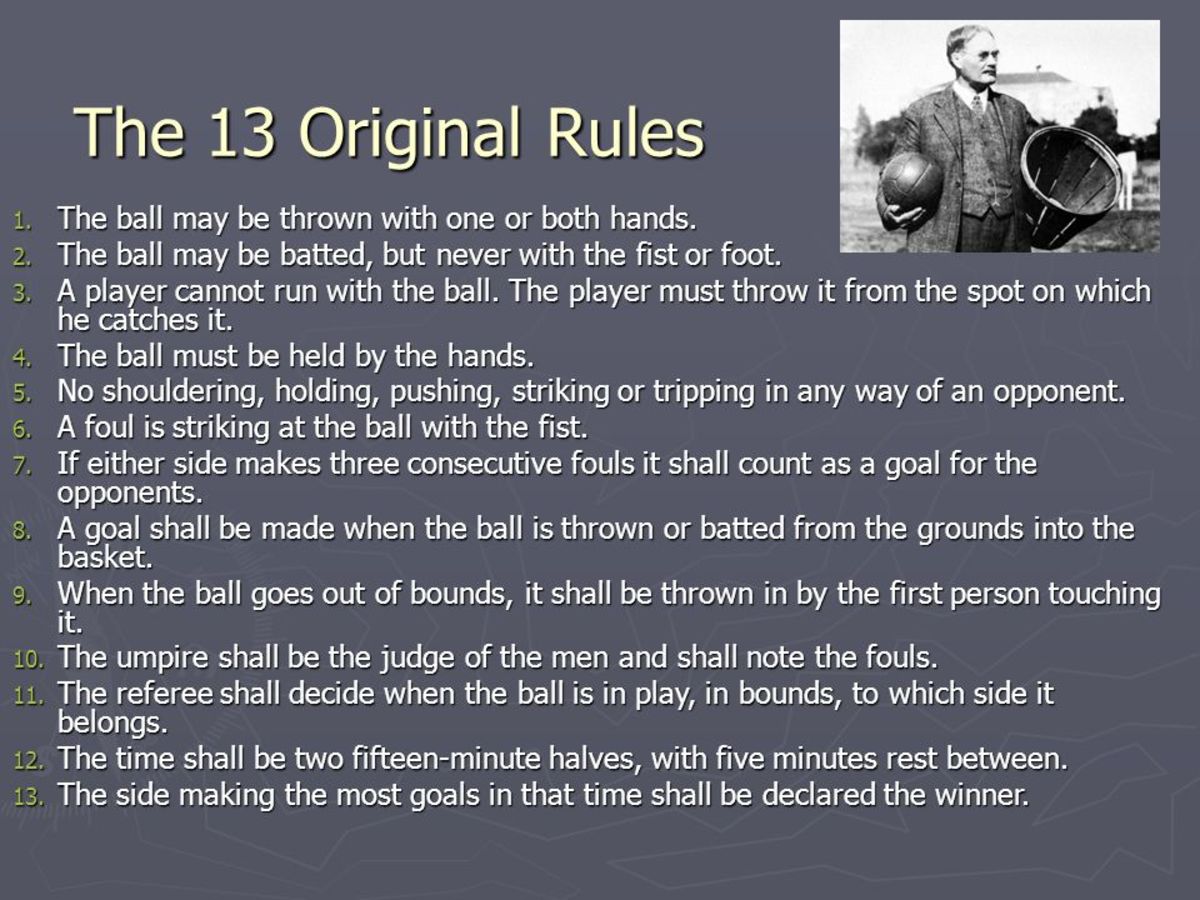
When Dr. Naismith invented basketball, he came up with 13 original rules for the game. These rules were written on a bulletin board in the gymnasium where the first game was played. Here are the original rules of basketball:
- The ball may be thrown in any direction with one or both hands.
- The ball may be batted with one or both hands, but never with the fist.
- A player cannot run with the ball. The player must throw it from the spot on which he catches it, allowing for no running.
- The ball must be held in or between the hands. The arms or body must not be used for holding it.
- No shouldering, holding, pushing, striking, or tripping in any way of an opponent is allowed. The first infringement of this rule by any person shall count as a foul, the second shall disqualify him until the next goal is made, or if there was evident intent to injure the person, for the whole of the game, no substitute allowed.
- A foul is striking at the ball with the fist, violation of Rules 3, 4, and such as described in Rule 5.
- If either side makes three consecutive fouls, it shall count as a goal for the opponents (consecutive means without the opponents in the meantime making a foul).
- A goal shall be made when the ball is thrown or batted from the grounds into the basket and stays there without falling, providing those defending the goal do not touch or disturb the goal.
- When the ball goes out of bounds, it shall be thrown into the field of play by the person first touching it. In case of dispute, the umpire shall throw it straight into the field. The thrower-in is allowed five seconds. If he holds it longer, it shall go to the opponent. If any side persists in delaying the game, the umpire shall call a foul on that side.
- The umpire shall be the judge of the men and shall note the fouls and notify the referee when three consecutive fouls have been made. He shall have the power to disqualify men according to Rule 5.
- The referee shall be the judge of the ball and shall decide when the ball is in play, in bounds, to which side it belongs, and shall keep the time. He shall decide when a goal has been made and keep account of the goals, with any other duties that are usually performed by a referee.
- The time shall be two 15-minute halves, with five minutes' rest between.
- The side making the most goals in that time shall be declared the winner. In case of a draw, the game may, by agreement of the captains, be continued until another goal is made.
Changes Over Time
Over time, the rules of basketball have changed. For example, the number of players on each team, the size of the court, and the type of ball used have all been modified. The original rules were also modified to allow for more scoring opportunities and to make the game more exciting to watch.

Conclusion
Dr. James Naismith's original rules of basketball were simple and straightforward. They provided the framework for a game that has become one of the most popular sports in the world. While the rules have changed over time, the core principles of basketball remain the same. It is a game of skill, strategy, and teamwork that is enjoyed by millions of people of all ages and skill levels.