
Ludwig van Beethoven is one of the greatest composers in history, known for his magnificent symphonies, piano sonatas, and chamber music. However, what many people don't know is that he suffered from a debilitating condition that affected his hearing. Beethoven started experiencing hearing loss in his late twenties, and by the time he was in his forties, he was almost completely deaf.
The Early Signs of Beethoven's Hearing Loss

Beethoven first noticed problems with his hearing in his late twenties. According to his letters, he heard a buzzing or ringing in his ears, which made it difficult for him to hear certain pitches, especially high frequencies. He also had trouble following conversations and had to rely on lip-reading to understand what people were saying.
Despite these early signs of hearing loss, Beethoven continued to compose and perform music, and he even wrote some of his most famous pieces during this time, such as the "Moonlight Sonata" and the "Eroica Symphony."
The Progression of Beethoven's Hearing Loss

Over the next few years, Beethoven's hearing continued to deteriorate. He started to withdraw from social situations because he couldn't understand what people were saying, and he became increasingly isolated. He also became more irritable and difficult to work with, which strained his relationships with his friends and colleagues.
Despite these challenges, Beethoven continued to compose music, relying on his memory and imagination to create new works. However, he struggled to hear the sounds he was creating in his head, and he had to rely on others to play his music and give him feedback.
Beethoven's Complete Deafness

By the time Beethoven was in his forties, he was completely deaf. He could no longer hear any sounds, including his own music. This was a devastating blow for Beethoven, who had dedicated his life to music and relied on it for his livelihood.
Despite his deafness, Beethoven continued to compose music, using a special rod that he would bite onto and place against the soundboard of his piano to feel the vibrations. He also communicated through a notebook, where he would write down his thoughts and ideas. His friends and colleagues would write their responses in the same notebook, allowing Beethoven to have some form of communication.
The Cause of Beethoven's Deafness
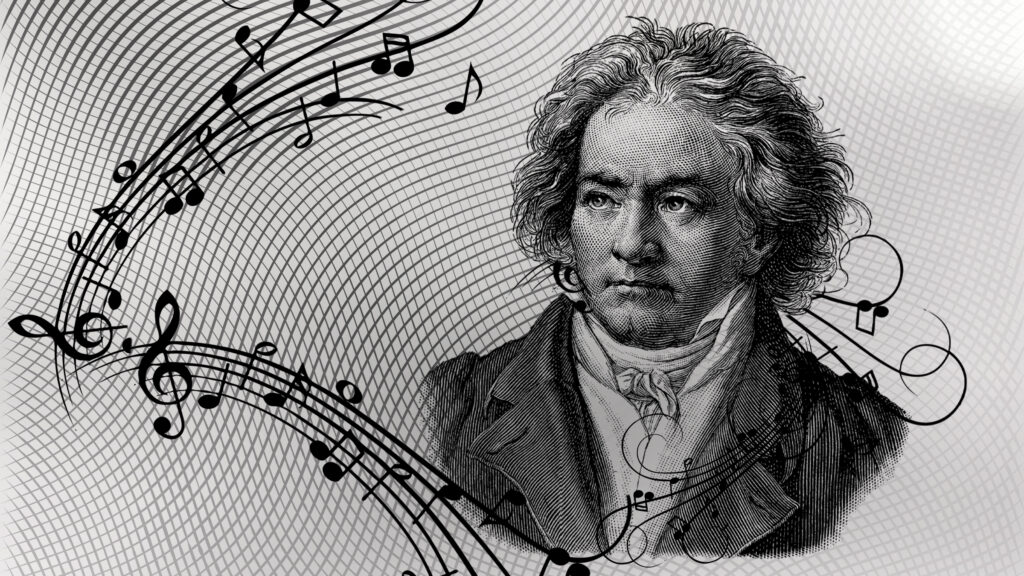
The exact cause of Beethoven's deafness is still unknown, but there are several theories. One theory is that it was caused by lead poisoning, which was common in the 18th and 19th centuries due to the use of lead-based paints and utensils. Another theory is that it was caused by a viral infection, such as typhus or syphilis.
Regardless of the cause, Beethoven's deafness had a profound impact on his life and his music. It forced him to rely on his other senses and his imagination to create music, and it gave him a unique perspective on the world.
Beethoven's Legacy

Despite his struggles with deafness, Beethoven left an incredible legacy of music that continues to inspire and move people today. His works are still performed by orchestras and musicians around the world, and his influence can be heard in the music of countless composers and artists.
Beethoven's story is a testament to the power of perseverance and the human spirit. Despite facing incredible challenges, he continued to create and innovate, leaving behind a legacy that will be remembered for generations to come.