
The Cold War was a political conflict between the United States and the Soviet Union that lasted from the end of World War II until the early 1990s. It was called the Cold War because there was no direct military conflict between the two superpowers, but they engaged in a variety of proxy wars and arms races that kept the world on edge for decades.
The Beginning of the Cold War
The Cold War began in 1947 when the United States implemented the Truman Doctrine, which stated that the U.S. would provide military and economic aid to countries threatened by communism. The Soviet Union responded by creating the Warsaw Pact, a military alliance with its satellite states in Eastern Europe.
The Cuban Missile Crisis

In 1962, the world came close to nuclear war during the Cuban Missile Crisis. The Soviet Union had placed missiles in Cuba, which could reach the United States. President John F. Kennedy ordered a naval quarantine of Cuba and demanded that the Soviet Union remove the missiles. After a tense standoff, the Soviet Union agreed to remove the missiles in exchange for a U.S. promise not to invade Cuba and to remove U.S. missiles from Turkey.
The Arms Race
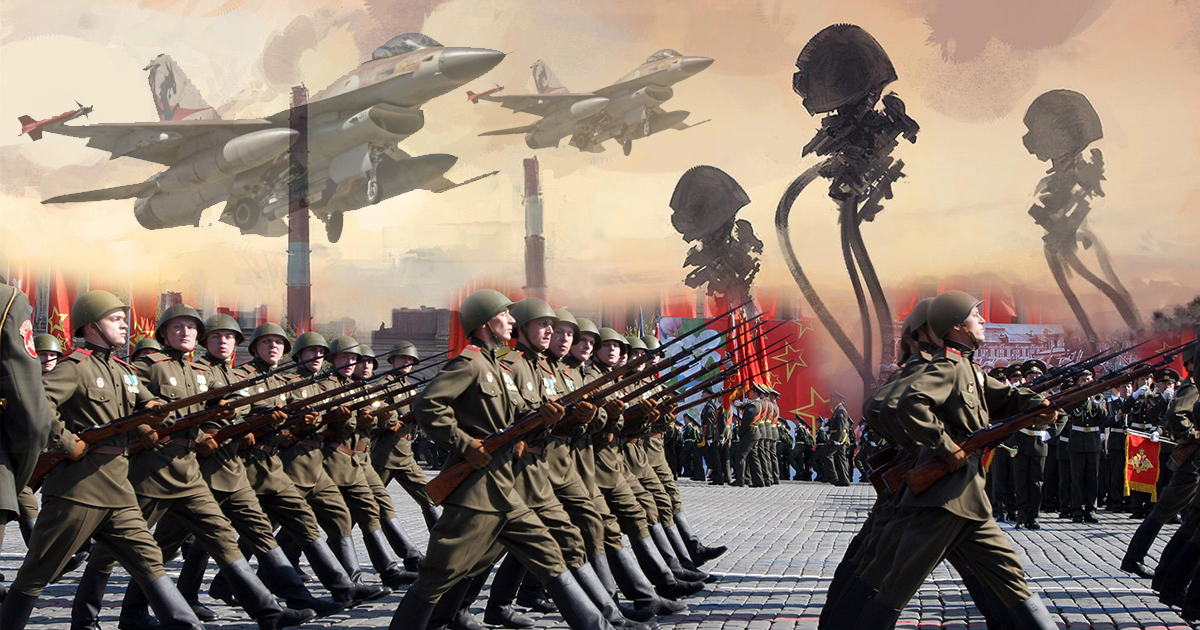
During the Cold War, both the United States and the Soviet Union engaged in an arms race, building up their nuclear arsenals and developing new weapons. The fear of a nuclear holocaust was a constant theme during the Cold War.
The Space Race

The Cold War also saw a competition between the United States and the Soviet Union in space exploration. The Soviet Union launched the first satellite, Sputnik, in 1957, and the first human, Yuri Gagarin, in 1961. The United States responded by landing a man on the moon in 1969.
The End of the Cold War

The Cold War ended in the early 1990s with the collapse of the Soviet Union. The Soviet economy was struggling, and the Soviet government was unable to keep up with the United States in the arms race. Mikhail Gorbachev, the leader of the Soviet Union, implemented reforms to try to save the Soviet economy, but they were not successful. In 1991, the Soviet Union dissolved, ending the Cold War.
Conclusion
The Cold War was a long and tense period in world history. The constant threat of nuclear war and the fear of communism shaped international relations for decades. While the end of the Cold War was a relief for many people, it was also a time of uncertainty as the world tried to adjust to a new political landscape. Today, the legacy of the Cold War can still be felt in many areas of global politics.